
Use three founder content pillars: authority content to demonstrate judgment, story content to show where that judgment came from, and selective lifestyle content to make the founder recognizable and relatable. Start with authority as the largest share. Adjust the mix according to the commercial bottleneck, not a fixed posting quota.
Most founder content calendars confuse subjects with jobs. "AI," "leadership," and "building in public" are subjects. They do not explain what a piece should change in the buyer's mind.
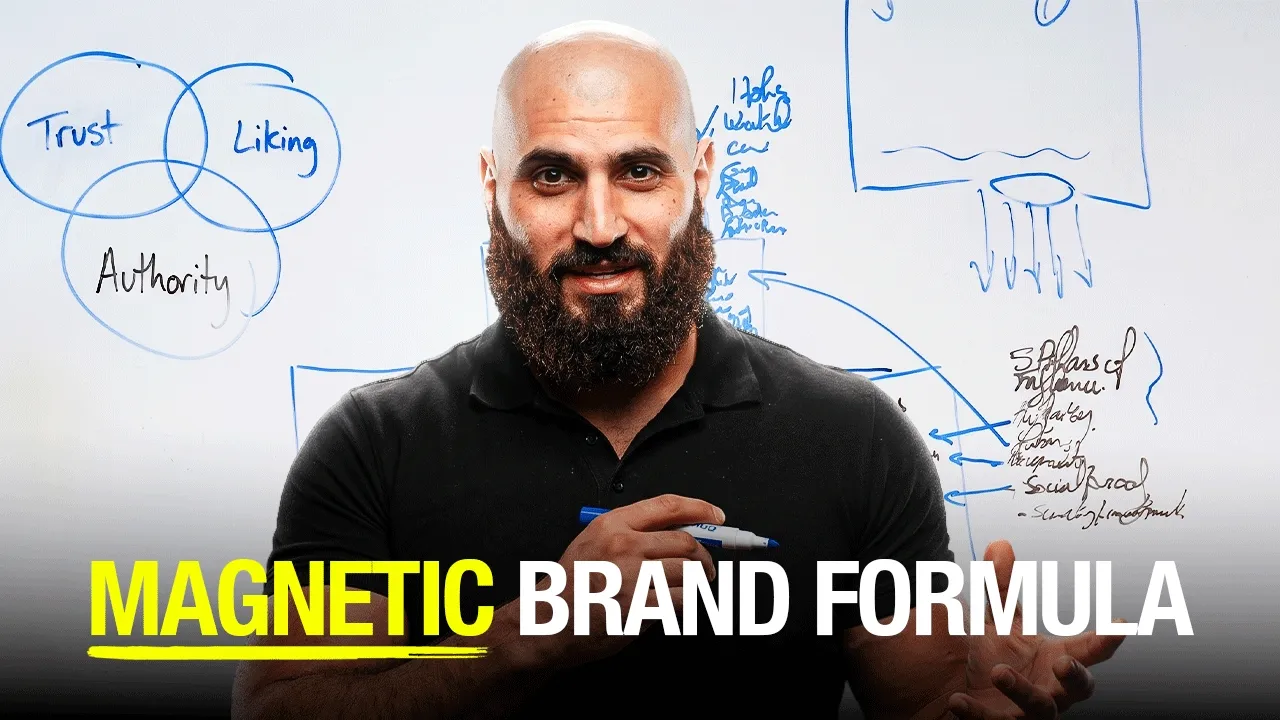
A useful set of pillars does. Authority content helps a buyer respect how you think. Story content helps them believe that your point of view was earned. Lifestyle content gives them enough human context to remember and relate to you. Leon Abboud presents this as a 70/20/10 starting mix: 70 percent authority, 20 percent story, and 10 percent lifestyle.[1]
The ratio is a planning hypothesis, not a platform law. A technical founder with no public proof may need more authority. A known expert whose content feels cold may need more story. A founder with strong reach but no buyer relevance should repair authority before adding personality.
Give each pillar one clear job
The buyer is the hero here, not the founder. Your audience is trying to make a difficult decision with incomplete information. In AI, Web3, and SaaS, that decision may involve technical risk, compliance, internal consensus, or a product category they barely understand.
Your content should make that decision easier. The founder appears as the guide who can diagnose the problem, explain tradeoffs, and show evidence. A personal story only earns space when it helps the buyer understand the guide's judgment. A lifestyle detail only earns space when it adds context or recognition rather than status theater.
| Pillar | Buyer question | Useful material | Main failure |
|---|---|---|---|
| Authority | Does this person understand my problem? | Frameworks, teardowns, decisions, demonstrations, evidence | Generic advice that proves nothing |
| Story | Why should I believe this judgment was earned? | Origin moments, mistakes, changed beliefs, hard tradeoffs | An autobiography with no buyer lesson |
| Lifestyle | Who is the person behind this expertise? | Rituals, values in action, work context, selective interests | Luxury signaling or unrelated diary posts |
LinkedIn's guidance describes useful thought leadership as original, actionable material that brings research or a distinctive expert perspective rather than adding to a glut of low-quality content.[2] That is a strong minimum standard for the authority pillar. The other two pillars should support that substance, not camouflage its absence.
Authority content: make judgment inspectable
Authority content is not declaring that you are an authority. It is letting buyers watch you work through a decision they recognize.
A technical founder has a rich source bank already: architecture reviews, product tradeoffs, implementation failures, support patterns, security questions, customer objections, and decisions to say no. The editorial task is to remove confidential details and turn one piece of judgment into a useful public artifact.
Four authority formats that carry proof
- Decision framework. Name the criteria you use when two plausible options compete.
- Teardown. Inspect a real workflow, product experience, or market claim and show what you would change.
- Demonstration. Show the product, method, model, or calculation doing the work.
- Pattern with boundaries. Explain what you have repeatedly observed, where it applies, and where it does not.
An AI infrastructure founder might compare evaluation methods under model drift. A Web3 founder might explain when onchain incentives create the wrong participant behavior. A SaaS founder might show why an onboarding metric improved while account health declined. Specificity turns expertise into evidence.
Google's people-first content guidance asks whether material serves an intended audience, demonstrates first-hand expertise, and leaves the reader able to achieve a goal.[3] Use those questions before publishing an authority piece. If a capable buyer learns nothing they can apply, the draft is probably reputation theater.
Story content: show the cost of the lesson
Story content builds belief when it reveals how a conclusion was earned. The strongest founder stories contain a decision, a consequence, and a changed operating rule.
Do not start with "my journey." Start with the buyer's present problem. Then choose the part of your history that helps them see it differently.
Use the Scar to Standard sequence
- Situation. Name the real context without unnecessary drama.
- Choice. Explain what you decided and why it seemed reasonable.
- Cost. State what the decision exposed, without inventing numbers or polishing away uncertainty.
- Correction. Show what changed in your method.
- Standard. Give the reader a rule, question, or test they can use.
For example, "We posted for six months and got no pipeline" is only a setup. The useful story identifies the audience mismatch, the moment the team noticed it, the publishing rule that changed, and the evidence they now review. The buyer gets a standard, not a motivational ending.
Origin stories work the same way. Tell the bounded part that explains why you care about the problem and what you noticed that others missed. The complete company biography belongs elsewhere. The guide to telling a founder story customers care about shows how to keep the customer at the center.
Lifestyle content: create recognition without performing status
Lifestyle is the smallest pillar because commercial trust cannot live on personal snapshots alone. Used carefully, however, it gives the market memory cues and shows values in action.
The best details are adjacent to the work. A founder can show the ritual used before a difficult product review, the notebook where customer language is captured, the conference conversation that changed a view, or the personal symbol that reinforces a professional standard.
The content still needs a reason to exist. A photo of an expensive car asks the audience to admire the founder. A photo of a battered prototype beside the decision that saved the product gives the buyer context. One is status display. The other makes the work memorable.
Run the relevance check
- Does this reveal a value that shapes how the company operates?
- Does it give useful context to a professional decision?
- Will the intended buyer understand why it is in the feed?
- Would you still publish it if public like counts disappeared?
If every answer is no, keep the moment personal. A founder does not owe the internet unrestricted access to build a human brand.
Choose the ratio from the missing belief
Leon's 70/20/10 model is a sensible starting point because authority remains the center of gravity.[1] Do not defend the ratio when the evidence says the mix is wrong.
| Observed problem | Likely missing belief | Adjustment |
|---|---|---|
| Good reach, weak buyer conversations | People notice you but cannot connect you to an expensive problem | Increase specific authority content |
| Expert content gets saved but the founder feels interchangeable | People respect the ideas but do not know the source | Add earned stories and recognizable language |
| Prospects trust the founder but cannot evaluate the offer | The company handoff and proof path are missing | Add decision and proof assets, not more lifestyle |
| Personal posts outperform everything but attract peers | The audience likes the founder without seeing buyer relevance | Reconnect stories to customer decisions |
Do not confuse a popular pillar with a useful one. Lifestyle may collect more public reactions because it asks less of the audience. Authority may generate fewer likes while reaching a buyer who forwards it into an account. Compare the business job, not just the visible count. The guide to getting customers from content without going viral explains how to judge that wider format and distribution portfolio.
Build a four-week pillar board
Start with one buyer, one problem cluster, and one commercial outcome. Then build the calendar from source material instead of brainstorming empty topics.
Week 1: collect raw evidence
Review sales calls, product reviews, support threads, and founder voice notes. Capture exact buyer questions, repeated tradeoffs, changed beliefs, and approved proof. The workflow for turning sales calls into founder content explains how to do this without leaking private customer information.
Week 2: draft the authority spine
Create one deep explanation and two smaller assets from the same decision. The long-form owner should define the problem, criteria, evidence, limits, and next step. The short pieces should open different doors into that owner rather than repeat it line for line.
Week 3: add the earned story
Choose one real moment that explains why the authority position exists. Preserve the awkward tradeoff or failed assumption. Remove any claim you cannot verify. End with a standard the buyer can use.
Week 4: add one human cue and inspect the mix
Publish a work-adjacent lifestyle detail only if it strengthens recognition or meaning. Then review who responded, which asset sales used, and where qualified readers went next.
The calendar should remain small enough to sustain. The wider founder-led marketing system shows how a team can own production while the founder remains the source of judgment.
Measure whether each pillar did its job
Do not assign one score to all three pillars. Authority, story, and lifestyle create different signals.
- Authority: qualified saves, internal forwards, sales usage, relevant search discovery, buyer questions, and proof consumption.
- Story: replies that reference the lesson, prospect recognition of the operating principle, and increased depth into related authority assets.
- Lifestyle: recall, relevant conversation starters, and whether the detail helps the right market remember the founder.
- Commercial movement: qualified visits, return visits, calls, applications, influenced opportunities, and won business with recorded content exposure.
Attribution will remain imperfect. Google Analytics explains that attribution models assign credit across touchpoints rather than assuming the last interaction caused the entire result.[4] Keep self-reported source data, CRM notes, and content touches beside the opportunity. The founder brand ROI guide provides a practical ledger.
The final editorial rule is simple: authority earns respect, story earns belief, and lifestyle creates human recognition. None of them should operate alone. Build the mix around the buyer's missing belief, then make the path from useful idea to company proof easy to follow.
If your company has real expertise but the founder is still trapped in the production queue, book a Founder Funnel strategy call. We install content infrastructure that captures the founder's judgment, turns it into buyer-ready assets, and connects distribution to qualified pipeline.
Sources
- Leon Abboud, "The 3 Content Types YOU Need to Convert Attention", published 8 May 2026. The 70/20/10 model begins at 02:57.
- LinkedIn Marketing Solutions, "What is thought leadership?"
- Google Search Central, "Creating helpful, reliable, people-first content"
- Google Analytics Help, "Get started with attribution"