
If you already run a proven business, use qualified company pipeline as the primary way to monetize your personal brand. Add platform revenue when eligible viewing can offset production. Accept sponsorships only when the sponsor fits the audience and the deal does not bend your editorial judgment. The content still needs an owned trust path, a clear company offer, and a measurable next step.
A creator can sell access to an audience. A founder already has an offer, a product, and a sales motion. The personal brand should make those assets easier to discover and easier to trust.
Leon Abboud describes four commercial jobs for a founder brand: demand generation, pipeline velocity, conversion improvement, and access to talent or investors.[1] The first three can affect revenue directly. The fourth can improve the company's ability to grow.

Start with the business outcome
Before choosing LinkedIn, X, YouTube, a newsletter, or a podcast, decide which commercial job needs help.
Demand generation is the right job when too few qualified people know the company exists. Pipeline velocity matters when buyers discover you but take too long to build confidence. Conversion matters when warm prospects reach a page or call but still do not act. Talent and investor access matters when growth depends on attracting people who need to trust the founder's judgment and direction.
Leon places demand generation first because a personal brand must bring relevant people into the company's orbit.[1] That does not mean chasing the largest possible audience. It means helping a specific market notice a specific expertise.
Choose the revenue model before you chase reach
If you already run a proven company, make qualified company pipeline the primary monetization path. Platform revenue can offset production when the channel has enough eligible volume. Sponsorships can work when the sponsor belongs in the audience's world and the commercial relationship is clear. Neither should pull your editorial plan away from the problem your company solves.
| Model | When it can win | Dependency and cost structure | What to measure |
|---|---|---|---|
| Platform revenue | Your channel already earns sustained eligible viewing and the income helps pay for production. | You depend on platform eligibility, revenue-sharing rules, viewing volume, and a steady publishing operation. Revenue can move even when your production cost does not. | Platform revenue, eligible viewing, production cost, and revenue by content type. |
| Sponsorships | Your audience is concentrated in a category that relevant sponsors value, and you would recommend the product without distorting the content. | You need sponsor demand, sales and contract work, approvals, disclosure, and enough editorial restraint to protect audience trust. | Sponsor revenue, direct production cost, renewals, audience response, and any change in returning viewers. |
| Company pipeline | You have a proven offer, the content reaches potential buyers or referral sources, and the team can qualify and serve the resulting demand. | You need an owned next step, sales capacity, delivery capacity, and attribution discipline. The payoff can take longer than a platform payout. | Qualified conversations, opportunities, wins, influenced gross profit, and time from discovery to decision. |
YouTube says creators in its Partner Program can share advertising revenue and use other monetization features.[4] That confirms the platform route exists. It does not tell you that ads are the best business model for a founder.
If a video contains branded content, sponsorships, endorsements, or another commercial relationship, YouTube requires the creator to mark it as paid promotion. The platform adds a disclosure label, and the creator remains responsible for applicable legal requirements.[5]
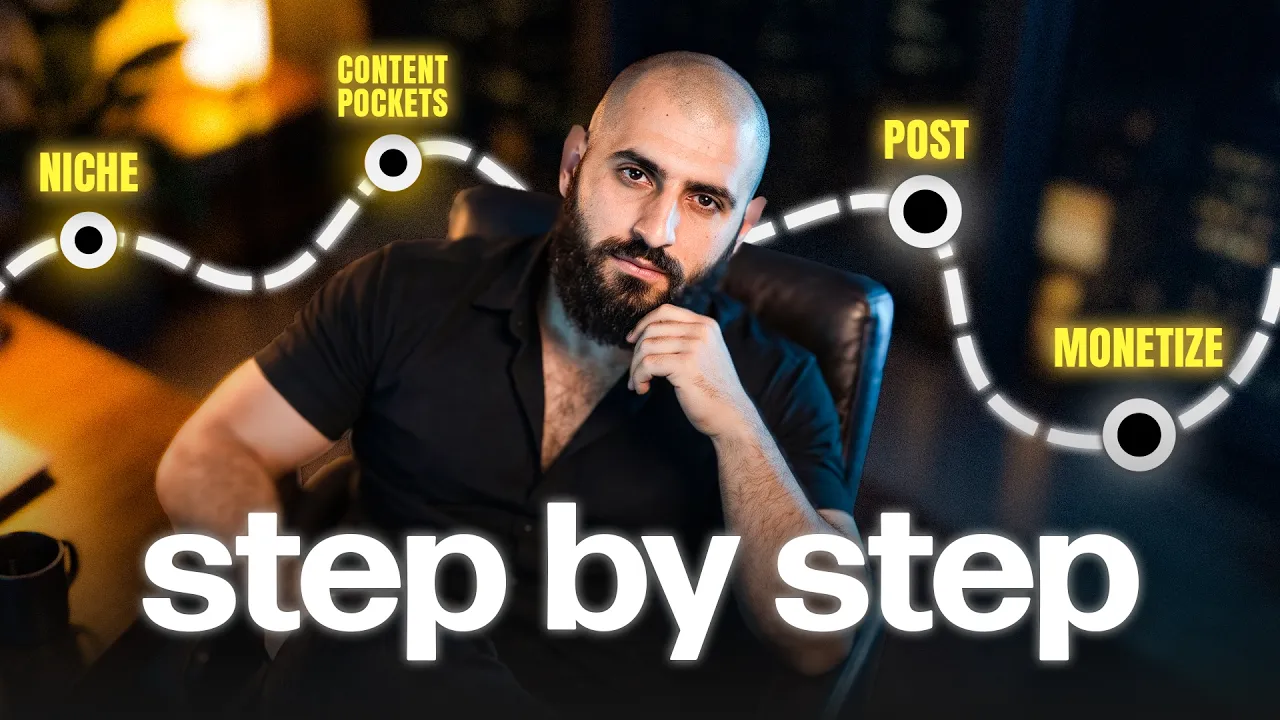
In a public October 2026 breakdown, Leon reports that his business partner's YouTube channel produced $3,300 in platform revenue from 1.1 million views during one 28-day period, about $15,000 per month from brand deals, and $22,000 per month from recurring services sold to qualified inbound leads.[3] These figures are Leon's first-party account. They have not been independently audited, and they are not a forecast for another founder.
Use a direct or indirect audience on purpose
A direct founder brand teaches the exact buyer your company wants to serve. It usually favors the pipeline model because the audience, problem, offer, and next step can line up.
An indirect founder brand reaches a wider adjacent market. It may create platform income, sponsor demand, and occasional high-value company leads, but qualification becomes harder. Leon describes his own audience as direct and his partner's broader AI audience as indirect.[3]
Pick one primary model for the next quarter. Let the other two remain optional revenue, then review whether each one strengthened the business or pulled attention away from it.
Build the Personal Brand Revenue Circuit
The circuit has four connected stages. If one is missing, more content adds activity without fixing the commercial break.
Discovery: become findable for one expensive problem
Choose a problem your company can solve and the founder has earned the right to discuss. Publish the decisions, tradeoffs, mistakes, and buyer questions inside that problem.
An AI founder might explain why evaluations fail after a model change. A Web3 founder might show the incentive tradeoff behind a governance proposal. A SaaS founder might explain which onboarding request the team rejected and why.
This lets a buyer inspect the founder's judgment. It also prevents the audience from growing around entertainment that has no connection to the offer.
Build a source bank from sales calls, product reviews, support questions, failed experiments, and approved customer evidence. The sales call content workflow shows how to capture that material without exposing private details.
Google's people-first content guidance asks whether content demonstrates first-hand expertise, serves an intended audience, and helps that audience achieve a goal.[2] Those are useful editorial tests even when a post is distributed on social media rather than search.
Trust: answer the questions that delay a purchase
Discovery creates a first touch. It does not complete the sale.
Leon calls the second job pipeline velocity: reducing the time between discovery and a buying decision by building familiarity, authority, and proof.[1] The exact sales cycle differs by product. The operating principle is to publish the information buyers need before they are ready to contact you.
- Decision content explains how you evaluate a hard choice.
- Proof content shows a verified demonstration, case study, or result with the needed context.
- Objection content answers the question that repeatedly stalls a deal.
Put the strongest pieces somewhere the company owns. A useful article, case study, demonstration, or email sequence gives an interested reader a coherent next step. Social reach can disappear. The buyer's path should not.
A newsletter only matters if it has a job. In Leon's framework, its role is to keep helping a qualified reader move from unfamiliar to familiar.[1] A weekly collection of unrelated observations will not repair a weak offer or unclear positioning.
Action: make the next step proportionate to trust
A reader who discovered you five minutes ago may not book a call. Give people a next step that matches how much they already know.
For low trust, route to a checklist, guide, or demonstration that solves a small part of the problem. For medium trust, route to a case study, workshop, or diagnostic. For high trust and clear fit, offer a sales conversation.
Keep one primary route per piece. Multiple competing calls to action make the reader decide what your content was supposed to do.
The company offer also needs a clear connection to the founder's content. If the founder teaches one problem but the landing page sells a broad menu of services, the handoff breaks. Repeat the same buyer, problem, mechanism, and next step on both sides.
Evidence: instrument the handoffs
A personal brand becomes commercially manageable when the team can inspect movement through the circuit.
Use distinct links for founder channels where possible. Add a "How did you hear about us?" field. Ask prospects which content they saw. Record founder-content touches in the CRM without pretending one post caused the entire deal.
- Qualified discovery: relevant roles, companies, subscribers, and site visits.
- Trust movement: repeat visits, useful replies, case study views, and email engagement.
- Commercial action: qualified calls, applications, demos, and opportunities.
- Business result: pipeline influenced, wins, gross profit, talent hires, or investor conversations.
The founder brand ROI guide provides the full content-to-close ledger. Use this article to design the path, then use that guide to measure it.
The four jobs of a profitable founder brand
Demand generation
Use demand content when the market does not know you. Teach an expensive problem, show a relevant point of view, and distribute it where the intended buyers already spend attention.
If a new follower cannot plausibly become a buyer, referral source, partner, employee, or investor, ask why your system is optimized to attract that person.
Pipeline velocity
Use trust content when prospects need more context before acting. Case studies, demonstrations, comparison pages, objection answers, and email sequences can help buyers evaluate you on their schedule.
Do not claim that content always shortens a sales cycle. Compare cohorts and inspect real deals. The job is to reduce avoidable uncertainty, not to force a buyer through an arbitrary timeline.
Conversion improvement
Use conversion content when qualified interest reaches a decision point but stalls. Align the founder's public explanation with the company's offer page, proof, sales call, and follow-up.
Listen for buyer language such as "I have been following your work" or references to a specific video or article. Record those statements as evidence. Compare conversion among prospects with known founder-content exposure against other qualified prospects. Treat the result as directional unless the sample and tracking support a stronger conclusion.
Talent and investor access
A founder's public work can also help candidates and investors evaluate how the company thinks. Leon includes both in his fourth lever.[1]
Publish enough substance for a serious person to inspect the mission, standards, and category judgment. Keep confidential fundraising details and private employee information out of public content. The goal is informed interest, not manufactured hype.
Choose content with a revenue test
- Which qualified audience is this for?
- Which expensive problem does it help them understand?
- Which of the four business jobs does it perform?
- What is the one next step?
- What evidence will tell us whether someone moved?
If the team cannot answer those questions, hold the piece. More volume will not make an unconnected idea commercial.
This does not turn every post into a pitch. Most useful content should teach, show, or clarify. The commercial discipline sits underneath the editorial choice: the right person receives relevant help from a founder whose company can solve the larger problem.
The guide to getting customers without going viral explains how a small relevant audience can be more useful than broad reach. The founder-led marketing guide shows how to fit that content into a broader operating system.
A 30-day implementation plan
Week 1: find the break
Map the current path from founder content to the company offer. Choose one of the four business jobs. Interview sales and review recent calls to identify the questions or doubts that interrupt movement.
Week 2: build the missing assets
Create one strong source piece from real founder experience. Add the next-step asset it needs, such as a case study, diagnostic, article, or clear offer page. Set up a distinct link and CRM field.
Week 3: distribute and converse
Publish adaptations of the source piece on the primary channel. Answer buyer-relevant questions in replies and direct conversations. Send interested people to the next step only when it fits their question.
Week 4: inspect movement
Review the names and companies behind the traffic. Read sales notes. Check which content created useful questions, repeat visits, or qualified actions. Keep the parts that moved the right people. Repair the break before increasing volume.
A founder personal brand is monetized when public expertise makes a real business easier to discover, evaluate, and choose. The revenue circuit gives every piece a job and every interested buyer a route forward.
If your expertise is strong but the circuit keeps breaking under founder time, book a Founder Funnel strategy call. We install the content infrastructure that captures the founder's real judgment, distributes it, and connects buyer movement to qualified pipeline.
Sources
- Leon Abboud, "Once you understand THIS, your personal brand will make millions", published 28 August 2026.
- Google Search Central, "Creating helpful, reliable, people-first content".
- Leon Abboud, "Give me 23 minutes and I'll make your personal brand disgustingly profitable", published 6 October 2026. The monetization comparison begins at 13:08. The first-party case runs through 22:09.
- YouTube Help, "YouTube partner earnings overview".
- YouTube Help, "Add branded content restrictions and disclosure labels".