
To launch an AI product on X, build one launch spine before writing posts: a sharp claim, a short demonstration, concentrated distribution, an owned action page, and a follow-up plan. Publish the main announcement and demonstration together. Bring relevant people into one real conversation, route qualified attention to a working product or clear next step, then use the questions and product behavior as evidence for follow-up.
A viral post is one possible result. It is not the plan.
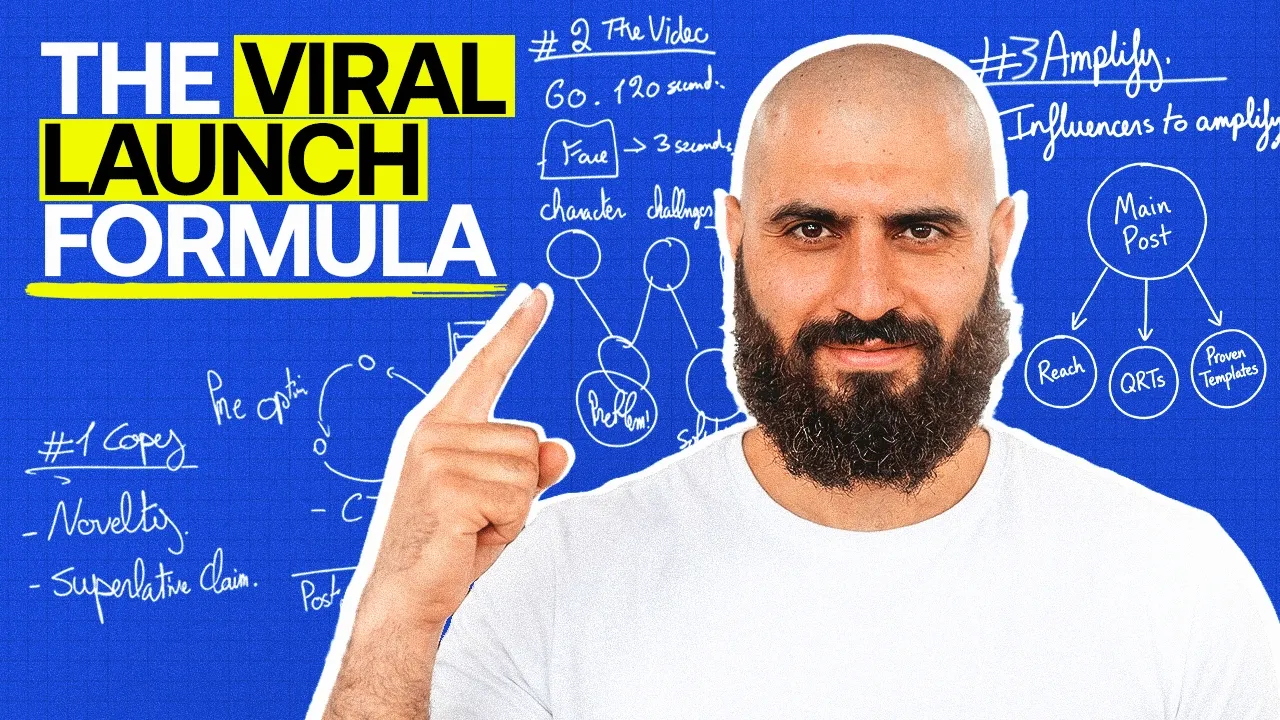
Leon Abboud studied a set of high-reach AI launches and found a recurring structure: announcement copy built around novelty, a short product video, and distribution concentrated around the main post.[1] This guide keeps that structure and adds the parts founders often miss: product readiness, buyer fit, compliant promotion, conversion, and measurement.
Decide whether X is the right launch room
Use X when your intended early users, technical evaluators, partners, or category voices already gather there. Do not choose it because another AI product went viral.
- Search the problem, competing products, and technical terms on X.
- Identify the people already explaining or solving the problem.
- Read their replies, not only their follower counts.
- Check whether real buyers ask questions, share tools, and try new products there.
- Compare that behavior with LinkedIn, YouTube, Product Hunt, relevant communities, and your own list.
Leon argues that X can be useful for AI, technology, and Web3 launches because early adopters and technical users participate there.[1] Treat that as a channel hypothesis. Confirm it against your own buyer conversations and existing audience.
If the right users are elsewhere, launch there first. You can still use X as one distribution lane.
Build the Launch Spine
The Launch Spine has five connected parts. A weak launch usually has a break between two of them.
The post can earn attention while the page remains unclear. The video can look polished without showing the product. The creator push can get views from the wrong market. The waitlist can collect emails without a useful follow-up. Map the full spine before launch day.
Write a claim a buyer can verify
Your launch claim should combine novelty, a specific transformation, and a next step.
Novelty answers, "What changed?" The transformation answers, "Why should I care?" The next step answers, "How do I inspect it?"
Leon uses an "Introducing" statement to make novelty explicit.[1] The word itself is optional. The function is not.
Weak: Introducing Atlas, the future of intelligent workflow automation.
Stronger: Introducing Atlas. It turns a failed production trace into a reviewable AI evaluation in one workflow. Run the example with your own trace.
The stronger version gives a technical buyer something to inspect. It does not ask the reader to trust a superlative.
Avoid "world's first," "best," or "fastest" unless you have evidence and a precise comparison set. Leon observed superlative claims in large launches.[1] That does not make every superlative true or useful. Unsupported hype can damage the trust the launch is supposed to create.
Which buyer is this for? Which job can they now complete? What changed from the old way? Can the product demonstration prove the claim? Is the next step obvious? If the demonstration cannot prove the claim, narrow it.
Show the product before explaining the architecture
The launch video should make the result visible quickly. A buyer should not need a narrated company history before seeing the product work.
Leon recommends a short video with a face at the start, a clear promise, product use, the surface-level change, and the deeper outcome.[1] The founder's face can establish ownership and trust. The product must carry the proof.
- Buyer problem. Name the situation the intended user recognizes.
- Working result. Show the product completing the main task.
- How it works. Explain only the mechanism needed to trust the result.
- Deeper change. Connect the feature to a business or operating outcome.
- Action. Tell the viewer where to try it, inspect it, or request access.
For an AI support product, the surface result may be a drafted response. The deeper change might be giving a support lead one review queue for model output, policy checks, and escalations. Show both.
Do not hide limitations that affect the decision. If the product requires specific data, a supported stack, human review, or a beta environment, say so. Technical buyers trust a bounded claim more than a sweeping one.
The homepage copy guide shows how to carry the same buyer problem, outcome, and mechanism from the video to the action page. The message should survive the click.
Concentrate distribution without buying engagement
A launch works better when several relevant sources of attention point toward one main post. That gives the market a shared place to watch the demonstration, ask questions, and inspect reactions.
Start with people who have a real reason to participate: founders and team members, approved design partners or customers, investors or advisors who understand the market, integration partners, and independent creators who have used the product.
Give each person useful material. That may include the product link, demonstration, screenshots, technical notes, and a clear description of what changed. Do not give everyone the same script.
X's authenticity policy prohibits paid, traded, or coordinated exchange of engagement and other attempts to make content appear more popular than it is.[3] Do not pay for likes, reposts, replies, or views. Do not run an engagement pod.
If you hire a creator, pay for real creative work and an honest endorsement, not a guaranteed engagement action. The FTC says a material connection such as payment or a free product should be disclosed clearly and in a place people will notice.[4] Put the disclosure in the post or video itself. Do not bury it behind a profile page or vague abbreviation.
Leon discusses quote-post amplification as part of the launch pattern he studied.[1] Use quote posts only when the person adds an independent point of view and follows applicable rules and disclosure requirements. A pile of paid reposts is not authority.
Build the action page before launch day
The launch post cannot carry every detail. Its job is to earn the next action.
- What does the product do?
- Who is it for?
- Which problem does it solve?
- How does it work?
- Which systems or inputs does it require?
- What proof is available?
- What should the visitor do next?
Product Hunt's official launch guidance says products should be usable or have a trustworthy availability timeline. It also warns that an unclear or broken website can keep a product from being featured.[2] Those are useful readiness tests even when Product Hunt is not your primary channel.
Match the action to the product stage. A working self-serve product can route to signup or a live example. A technical beta can route to a qualified access request. An enterprise product can route to a focused technical review.
Avoid a generic waitlist if the product is usable. Avoid a sales call if the buyer needs to see the product first. Ask for the smallest action that creates real evidence.
Plan the post-launch proof cycle
Launch day reveals what the market understands. Capture the questions people ask before and after trying the product, objections from qualified buyers, unclear moments in the demonstration, unexpected use cases, and product failures or limits that need repair.
Turn that evidence into a walkthrough for the most requested workflow, a technical explanation for the most serious question, a comparison that names the tradeoffs, a founder note on what failed, or an updated demonstration that fixes an unclear step.
Google's people-first guidance asks whether content shows first-hand expertise and helps an intended audience achieve a goal.[5] Use that filter for follow-up posts. Publish what helps the buyer evaluate or use the product, not a victory lap built only around launch numbers.
A seven-day launch plan
Seven days before
Freeze the launch claim. Confirm that the product demonstration proves it. Run the action page through the Grunt Test with people who fit the market but have not heard the pitch.
Instrument the important actions. Use tagged links, product events, and a CRM source field where appropriate. Decide which events count as qualified use.
Prepare the main post, video, screenshots, technical notes, support answers, and follow-up drafts. Ask partners and approved creators to inspect the product before deciding what they will say.
Three days before
Test the complete path on desktop and mobile. Open the post assets, video, action page, signup or booking flow, confirmation message, analytics, and support route.
Check load time and failure states. A launch is a bad time to discover that the video crops the interface or the signup form rejects business email addresses.
Confirm every paid relationship has a disclosure plan. Remove any request for guaranteed likes, reposts, comments, or views.
Launch day
Publish the announcement and product demonstration together. Pin the main post. Have the founder and product team answer real questions while context is fresh.
Send the launch to your own list and relevant partners. Give them the direct product and post links. Ask for honest feedback, not manufactured engagement.
Watch the path, not only the post. If qualified people click but fail to start, inspect the page and product. If they watch but do not click, inspect the claim and action. If the wrong audience arrives, inspect distribution.
The next three days
Publish follow-up proof while the questions are still specific. Fix broken product or page steps before buying more distribution.
Contact qualified users who asked for help or gave permission to continue the conversation. Record what they understood before you explained it. That language will improve the next version of the message.
Measure the launch as a path
Impressions show exposure. They do not show whether the launch worked.
- Qualified attention. Relevant profile visits, video completions, and visits from intended roles or communities.
- Product action. Trials, examples run, access requests, demos, or documentation sessions.
- Buyer evidence. Useful replies, product questions, activated accounts, repeated use, and qualified conversations.
- Commercial result. Opportunities, revenue, retained users, partnerships, or another preselected business outcome.
Use the founder brand ROI guide to connect content touches with pipeline without pretending one post caused the entire deal.
Choose the measurement window before launch. Some products can show meaningful use within hours. An enterprise AI product may need a longer evaluation. The window should match the buying motion, not the speed of the feed.
Mistakes that waste launch attention
Leading with the model instead of the job
"Powered by twelve agents" may be technically interesting. It does not tell the buyer which work becomes possible.
Making a claim the demo cannot prove
A polished video cannot rescue an inflated promise. Narrow the promise or improve the demonstration.
Sending traffic to an unclear page
The launch post and action page should use the same buyer, problem, outcome, and mechanism.
Splitting attention across several main posts
Pick one primary announcement. Team members, partners, and creators can add their own context while pointing people toward the working product and shared conversation.
Buying engagement
Paid likes, reposts, replies, and coordinated exchanges create policy risk and weak evidence. Pay for legitimate creative work or distribution with clear disclosure.
Treating launch day as the finish line
The first questions and failures are inputs. Product Hunt describes early adopters as useful sources of feedback.[2] Your own launch should create the same learning loop.
Launch checklist
- The intended buyer already participates on X.
- The product is usable or has an honest access timeline.
- One sentence explains what changed and why it matters.
- The demonstration proves the central claim.
- The action page repeats the same message.
- The primary action works on desktop and mobile.
- Links and product events are instrumented.
- Participants have real context and are not using one copied script.
- Paid relationships are disclosed clearly.
- No one is buying or trading engagement.
- The team can answer product questions on launch day.
- Follow-up content is ready for likely objections.
- Success is defined beyond impressions.
A good AI product launch gives the buyer a fast path from curiosity to proof. The founder states the change, shows the product doing the job, invites real scrutiny, and makes the next action easy.
The X content strategy guide shows how to keep earning buyer attention after launch. The customer acquisition guide explains why the right users matter more than broad reach.
If your team has a strong product but no repeatable launch and content infrastructure, book a Founder Funnel strategy call. We install systems that turn founder judgment and product proof into visibility, trust, and qualified pipeline.
Sources
- Leon Abboud, "I Studied 100+ Viral AI Launches - Here's The Exact Formula", published 24 April 2026.
- Product Hunt, "What to know before you launch".
- X Help, "X's platform manipulation and spam policy".
- Federal Trade Commission, "Disclosures 101 for Social Media Influencers".
- Google Search Central, "Creating Helpful, Reliable, People-First Content".