
Announce a product update by connecting seven facts in order: the buyer problem, the change, the outcome it enables, why the change fits your company vision, evidence that it works, the people responsible, and one useful next action. Put the technical record in release notes. Use the founder announcement to explain the judgment behind the release. Let the company account own official links, availability, support, and corrections.
Your team spent six weeks shipping a difficult change. The founder posts, "Big update. Version 2 is live." The company account repeats the feature list. Engineering publishes a changelog. Everyone inside the company understands the work. A buyer sees three disconnected messages and still cannot answer one question: why should I care?
The problem is not a lack of excitement. The update was written from the shipping team's point of view. Buyers need the change translated into a decision, task, or risk they already recognize.
Release notes, product announcements, and founder updates have different jobs
Do not ask one asset to serve every reader. A release note is a durable technical record. A product announcement tells users what changed and how to use it. A founder update explains why the company chose this move and what it says about the direction of the product.
| Asset | Primary reader | Job | Must include |
|---|---|---|---|
| Release notes | Users, developers, administrators | Record the exact change | Version, scope, availability, fixes, breaking changes, migration details |
| Product announcement | Current and prospective users | Explain the buyer outcome | Problem, capability, evidence, access, next step |
| Founder update | Buyers, partners, team, market | Explain the judgment and direction | Vision, tradeoff, progress, team, boundaries |
| Support notice | Affected users | Prevent or resolve disruption | Impact, action required, owner, timing, correction path |
GitHub's automatic release notes illustrate the first job. They can list merged pull requests, contributors, and a full changelog link.[2] That is useful operational evidence. It does not explain why a buyer should change a workflow or how the release fits the product's direction.
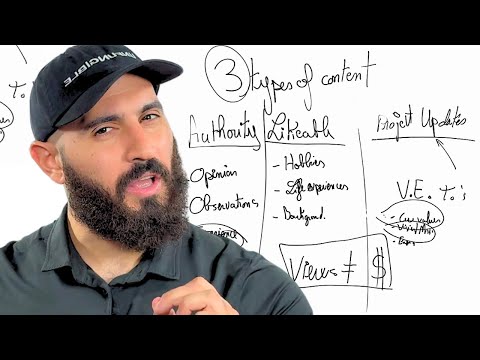
Leon warns that founders often make their personal account read like a system notification feed. His correction is not to hide the update. It is to give it meaning.[1]
Use the Vision, Execution, Team framework
Leon's framework asks three questions: where are we going, how are we getting there, and who is bringing the vision to life?[1] Those questions turn a shipped feature into a piece of evidence about the company.
Vision: name the destination
Vision is the customer change you are committed to making, not a category slogan. "The future of AI" says nothing. "Support teams should be able to test an agent before it speaks to a customer" gives the update a destination.
Keep the claim bounded. The release may move the company one step toward that outcome. It does not prove that the entire vision is complete.
Execution: show the proof of motion
Execution is what changed, the tradeoff the team resolved, and the evidence a reader can inspect. Name the capability in plain language. Then link to the demonstration, documentation, release notes, benchmark, or migration guide that supports it.
A founder does not need to narrate every ticket. Choose the implementation detail that helps the buyer understand why this change is credible or different.
Team: make responsibility visible
Credit the people who made the release real. Name the engineering, product, design, support, customer, partner, or community contribution that changed the outcome. Team is not a ceremonial thank-you at the end. It shows that the company can repeat the work.
Founder Funnel adapts Leon's three questions into a compact production tool called the VET Update Card. This card and the seven-part structure below are editorial extensions, not names used in the source video.
The founder messaging framework helps keep the vision attached to one problem, one belief, and one proof standard. Use it when every update seems to introduce a different company story.
A seven-part product update template
- Open with the buyer problem. Name the task, delay, risk, or decision the reader already recognizes.
- State what changed. Use one plain sentence. Include the product area and availability.
- Explain the buyer outcome. Tell the reader what they can now do, understand, avoid, or decide.
- Connect the vision. Explain why the company chose this step and where it is trying to take the customer.
- Show execution. Provide a demonstration, exact behavior, technical document, test, or release note.
- Credit the team. Name the people or customer learning that made the change possible.
- Give one next action. Try the feature, read the guide, migrate, ask a question, or book a relevant conversation.
Atlassian's launch guidance recommends answering what problem the product solves, why that problem matters, how the product solves it, how it compares with alternatives, and why customers should care.[3] Those questions belong in the truth sheet behind the announcement even when the final post is short.
The guide to turning technical expertise into buyer education helps when the explanation requires more depth than a launch post can carry.
Decide who publishes what
The founder and company accounts should not compete. Give each surface a stable job.
| Surface | Owns | Does not own |
|---|---|---|
| Founder account | Judgment, vision, tradeoffs, team recognition, market context | Canonical support instructions or a complete changelog |
| Company account | Official announcement, availability, links, access, corrections | Invented founder voice or unsupported claims |
| Product page or blog | Canonical buyer explanation, demonstration, proof, next step | Every low-level technical change |
| Documentation | Setup, behavior, limits, migration, reference material | Broad vision without operating detail |
| Release notes | Versioned technical record | The whole buyer story |
| Email or in-app message | Relevant notice for a known user segment | A broadcast to people the change does not affect |
Leon makes a similar distinction in the source video. The project account can carry official links and status information. The founder account should give the release context and direction.[1]
Build one owned source page before adapting the announcement. The content infrastructure guide explains how to keep source material, production, distribution, and measurement connected.
Three technical founder examples
AI company
Weak: "Our agent platform now has automated evaluations."
Stronger: "Support leaders should be able to test an AI agent against real failure cases before it reaches customers. Today we released scenario-based evaluations that score a proposed change before rollout. The product guide shows the test flow and current limits. Our product and support teams built the first scenarios from repeated customer questions. Existing customers can create an evaluation from the workspace."
Intercom's own Evals and Releases announcement follows a useful version of this sequence. It states the operating outcome first, names what each product component does, explains why the system was built, and then shows how the pieces work together.[4] Use that as a structural example, not copy to imitate.
Web3 project
Weak: "Testnet is live. Join now."
Stronger: "Developers need a safe way to test the settlement flow before committing production assets. Our public testnet is now open with documentation, faucet access, and a known-issues page. This moves us toward making settlement behavior inspectable before mainnet use. The protocol and developer-relations teams will publish corrections in the same source page. Start with the test transaction guide."
Do not add token-price language, vague safety claims, or a countdown that the product cannot support. For a token launch, use the separate token launch marketing plan and route financial communications through qualified review.
SaaS company
Weak: "We shipped dashboard filters."
Stronger: "Revenue teams were exporting the same report several times to answer one account question. Saved dashboard filters now let an administrator define that view once and share it with the team. This is one step toward removing manual report cleanup from weekly account reviews. The release note lists permission behavior and the help guide shows setup. Customers can create the first saved view from the dashboard."
Notice what the stronger examples avoid. They do not call the release revolutionary. They do not claim adoption before evidence exists. They give the buyer a reason, a fact, and a path.
A suggested 45-minute production time box
Use this time box when the release facts and owners are already available. Extend it when evidence, review, or customer-impact details are unresolved.
Minutes 0 to 10: collect the truth
Ask product and engineering for the shipped behavior, availability, limits, migration needs, supporting evidence, and known issues. Ask support which users will care and which questions they are likely to ask. Do not draft from a ticket title.
Minutes 10 to 20: complete the VET Update Card
Write the vision, execution, and team facts. Connect the change to one buyer problem. If the vision requires a promise the release cannot support, narrow the vision.
Minutes 20 to 30: write the canonical explanation
Draft the seven-part update. Put the direct answer first. Link to technical evidence instead of compressing every detail into the post. Check every number, date, availability statement, customer reference, and comparison with its owner.
Minutes 30 to 38: create channel versions
Keep the facts stable and change the doorway. The founder post can lead with the decision. Email can lead with the affected workflow. The in-app notice can lead with availability and action. Release notes can lead with version and technical scope.
Minutes 38 to 45: run the red-team read
- Can a buyer identify the problem and outcome without knowing the roadmap?
- Does the announcement separate current behavior from planned work?
- Can every claim be traced to a source or accountable owner?
- Are availability, permissions, risk, and migration limits visible?
- Does the next action work on mobile and without private context?
If this process repeatedly stalls because product truth lives across meetings, chat, and one founder's memory, the communication problem is operational. The founder-led marketing guide shows how to capture judgment without making the founder own every production step.
Measure understanding, adoption, and commercial movement separately
Public reactions can tell you whether the packaging attracted attention. They cannot tell you whether the update helped the right person act.
| Job | Useful evidence | Misleading substitute |
|---|---|---|
| Understanding | Fewer repeated questions, documentation use, successful setup, specific replies | Impressions alone |
| Adoption | Eligible users trying the feature, completing setup, or changing the target workflow | Announcement clicks without product action |
| Trust | Buyers inspecting proof, citing the update in calls, or returning to related material | Generic praise |
| Commercial movement | Qualified visits, influenced opportunities, sales usage, relevant strategy calls | Total follower growth |
Record which asset introduced the update, which source page the buyer used, and what happened next. The founder brand ROI guide provides a practical way to connect content exposure to qualified pipeline without pretending one post caused the whole sale.
Product update announcement checklist
- The buyer problem appears before the feature list.
- The shipped behavior is accurate and available to the named audience.
- The outcome describes what the buyer can do, not how excited the team feels.
- The vision is specific enough to guide the release and narrow enough to remain true.
- Evidence links to a demonstration, document, release note, or test.
- Current behavior and planned work are clearly separated.
- The team and source of customer learning are credited accurately.
- The founder and company accounts have different, explicit jobs.
- The next action is useful and works from the live page.
- Support, corrections, and known limits have an owner.
- Understanding, adoption, and commercial movement are measured separately.
A product update should leave the buyer with a clearer decision, not a larger pile of feature names. Start with the problem. Show what changed. Connect the release to a direction the customer can understand. Then give the technical detail and the next action somewhere reliable.
If product expertise exists but every announcement still starts from a blank document, book a Founder Funnel strategy call. We install content infrastructure that captures founder judgment, turns releases into buyer education, and routes the right people toward qualified conversations.
Sources
- Leon Abboud, "3 Types of Content Every Web3 Founder Must Create", published 17 June 2025. Project-update broadcast problem at 06:20, Vision, Execution, Team framework at 07:50, and vision-led update example at 10:19.
- GitHub Docs, "Automatically generated release notes", accessed 30 September 2026.
- Atlassian, "How to plan a killer product launch in 6 steps", published 11 October 2018.
- Intercom, "Announcing Evals and Releases: Evaluate Fin before, during, and after you go live", published 13 August 2026.