
Onboard a token holder by sending them to one owned page immediately after the purchase or mint. Reconfirm the vision, introduce the people accountable for delivery, explain how the product or membership works, offer a real route to help, and point to one useful next action. Then measure the handoffs from page visit to orientation, verified access, and first product use. A wallet balance or Discord join tells you that someone has access. It does not prove they understand the project or have reached value.
You did the hard part. The launch earned attention. The buyer moved funds, signed a transaction, or completed a mint. Your dashboard shows a new holder.
Then the experience goes quiet.
The buyer is left to reconstruct the roadmap from old posts, find the real community link, identify the team, and guess what to do next. Your team calls the transaction a conversion. The buyer experiences a gap.
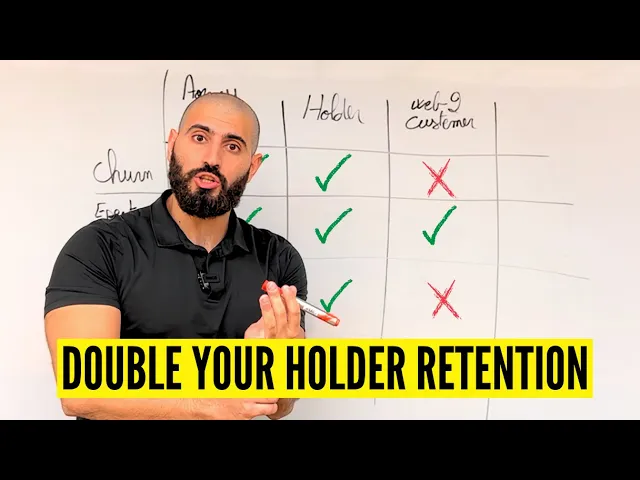
That gap is where uncertainty grows. It is also where a founder can make the project easier to understand without adding more hype. Leon's source lesson starts at the moment after purchase and treats onboarding as a deliberate path from buyer remorse toward informed participation.[1]
A purchase is not activation
The transaction answers one question: did this wallet acquire the asset? It does not answer whether the person understands the project, can use the product, knows where to get help, or wants to participate again.
The difference matters in Web3 because the asset may remain transferable after purchase. The ERC-721 standard, for example, includes ownership tracking, transfer functions, and a Transfer event when ownership changes.[2] The chain can prove that ownership moved. It cannot prove that the new owner understood the mission or found the next useful step.
Define the jobs separately:
- Acquisition gets the right buyer to a truthful decision.
- Onboarding gives that buyer enough context and access to reach first value.
- Community creates useful reasons to contribute, return, and build relationships over time.
- Retention is the observed outcome of continued value, not a slogan the marketing team can declare.
Your crypto marketing strategy should own acquisition and market trust. Your brand community design should own ongoing identity and participation. Holder onboarding owns the bridge between them.
Build the five-part holder onboarding path
Use one page as the front door. It can sit after the mint, purchase confirmation, claim, or verified holder check. The page should not become another pitch deck. It should answer the questions a cautious new holder has already earned the right to ask.
Leon teaches this sequence as reselling the vision, introducing the team, explaining the vehicle, creating direct access, and giving clear next steps.[1] "Resell" does not mean repeat the launch hype. It means help the buyer confirm what they bought, why the project exists, and what has not yet been built.
1. Reconfirm the vision without rewriting reality
State the problem and the change you want to create in plain language. Separate what exists now from what is planned. Link to the current product, documentation, roadmap, or public evidence. If the project depends on future delivery, say so.
A useful opening sounds like this:
We are building [specific vehicle] for [specific people] who need [specific change]. Today, holders can [current capability]. Next, the team is working on [bounded next milestone]. These are the risks and dependencies we can already see: [honest limits].
The holder should leave this section more informed than they were on the sales page. If the copy can only make them more excited, it is still promotion.
2. Introduce the accountable people
Show the humans responsible for product, community, and support. Use names, roles, evidence, and official profiles. Explain who makes which decision. A founder video can help because it carries voice and judgment, but it should not replace inspectable facts.
Do not inflate advisors into operators. Do not imply that a recognizable partner owns delivery when they do not. If the team is pseudonymous, explain the safeguards and public track record you can verify rather than inventing reassurance.
3. Explain the vehicle in buyer language
A token, NFT, protocol, game, or membership is not valuable merely because it exists onchain. Show what the holder can actually do.
- For a game, this may be the first playable action.
- For a protocol, it may be a safe product walkthrough or test environment.
- For an NFT membership, it may be verified access to one member resource or event.
- For a governance product, it may be reading an active proposal before voting.
- For a creator or education project, it may be accessing the first member lesson and submitting a question.
Keep price commentary and product instruction separate. Onboarding should help someone use, evaluate, or participate in the product. It should not pressure them to hold, buy more, or recruit friends.
4. Give a trustworthy route to access and help
Publish official community, documentation, support, and status links on the owned page. Explain any verification step before the holder leaves your domain. Show what the team will never ask for. Give a route for reporting impersonation or a broken link.
Stripe's crypto onboarding guide treats wallet access, the first transaction, and education as connected parts of the onboarding experience.[5] The same principle applies after a purchase: every handoff should explain what happens next and what information or permission is required.
5. End with one next action
A weak onboarding page closes with six buttons: join Discord, follow X, read the docs, watch the AMA, invite friends, and buy more. That is not choice. It is deferred prioritization.
Pick one first action that helps the holder experience the product or make an informed decision. Secondary links can remain available, but one action should be visually and verbally primary.
Use the First Useful Action test
The First Useful Action is the earliest observable step that lets a new holder use the product, contribute something real, or understand the project well enough to choose what to do next.
It passes four tests:
- Useful. It creates value or removes uncertainty for the holder, not just the project.
- Specific. You can describe it with a verb and object.
- Reachable. A qualified new holder can complete it without solving five undocumented prerequisites.
- Observable. You can record completion without collecting more personal data than the job requires.
| Project | Weak first action | First useful action | Possible event |
|---|---|---|---|
| NFT membership | Join chat | Claim verified access and open the member resource | member_resource_opened |
| Web3 game | Follow announcements | Complete the first playable session | first_session_completed |
| Protocol | Read everything | Run a guided safe product action | guided_action_completed |
| Governance | Vote now | Read one active proposal and its counterargument | proposal_brief_opened |
| Education pass | Invite friends | Finish the first lesson and submit one question | first_question_submitted |
The event names are examples, not a universal schema. Choose an action that matches the product. Do not call a page view activation because it makes the chart look better.
Build a useful first 24 hours
The owned page is the anchor. A short sequence can help the holder complete the path without forcing them into an endless drip campaign.
Immediately after purchase
- Confirm the transaction or access state in plain language.
- Send the holder to the canonical onboarding page.
- Show official support and security warnings.
- Present one primary next action.
After verified access
- Welcome them in the channel they explicitly chose.
- Repeat the first useful action, not the entire launch story.
- Give a human route for a blocked step.
- Mark promotional notifications as optional.
After the first useful action
- Explain what they unlocked or learned.
- Offer the next relevant action based on what they did.
- Invite feedback on the journey.
- Move ongoing participation into the community system rather than keeping them in onboarding forever.
Leon also recommends orientation content, verified community access, co-creation, and a first product action in his implementation examples.[1] Use those as design options, not mandatory tactics. A holder who wants documentation should not be forced into a group call. A holder who needs help should not have to post publicly.
Measure the event chain, not the applause
Instrument the journey as a sequence. Mixpanel defines a funnel as events performed in order within a chosen period, then uses that sequence to show conversion and drop-off.[3] Its quickstart also recommends defining an event for each step before selecting the measurement and filters.[4]
A simple holder onboarding chain could be:
purchase_confirmed
onboarding_opened
orientation_completed
official_access_verified
first_useful_action_completed
support_requested or feedback_submitted
Choose a completion window that matches the product. A simple membership resource may be reachable in one session. A technical protocol action may take longer. Record the reason before looking at the data so the window does not move to flatter the result.
Track these questions:
- What share of eligible new holders opened the onboarding page?
- Where did qualified holders stop?
- Which step generated support requests?
- How long did the first useful action take?
- Did the action differ by product, campaign, market, or access path?
- What did activated holders do next?
Do not join wallet data, personal identity, community behavior, and marketing profiles merely because the tools allow it. Define the minimum data needed for the decision, document consent and access, and give the data an owner and retention rule.
Connect this product funnel to the broader founder brand measurement process when founder content or creator distribution introduces the buyer. Keep acquisition source and activation evidence separate enough to audit.
Keep onboarding truthful and safe
Onboarding is still a company communication. It can create harm if it overstates utility, hides risk, pressures the holder, or sends them through unsafe links.
- Separate current functionality from roadmap commitments.
- Do not promise price appreciation, yield, retention, or access that the product cannot guarantee.
- Show official links on an owned domain and explain verification steps.
- State what the team and moderators will never request.
- Make marketing notifications and public participation optional.
- Give a way to leave, revoke access, or ask for help.
- Get qualified legal and compliance review for the product and markets involved.
If creators helped acquire the holder, preserve the same evidence and boundaries after the click. The guide to vetting crypto influencers covers audience fit, claims, disclosure, commercial terms, and measurement before you buy distribution.
Build the first version in seven days
- Day 1: map the gap. Walk from transaction to first value as a new holder. Record every page, redirect, permission, unanswered question, and dead end.
- Day 2: choose the First Useful Action. Pick one action for each real product path. Name the event and the owner.
- Day 3: write the five parts. Draft vision, team, vehicle, access, and action. Separate what exists from what is planned.
- Day 4: build the owned page. Put official links, security guidance, support, and the primary action in one mobile-readable place.
- Day 5: instrument the chain. Test every event in order. Confirm that data access, consent, and retention match the decision you need to make.
- Day 6: run a cold test. Ask someone who did not help build the project to complete the journey. Watch where language or permissions fail.
- Day 7: publish and review. Connect the page to purchase and community entry. Review drop-offs and support evidence after enough real users have had a fair chance to complete it.
The goal is not to trap someone in an asset. It is to replace the silence after purchase with a clear, owned path. A good holder onboarding system helps the buyer understand what they joined, reach something useful, and decide how they want to participate next.
Sources
- Leon Abboud, "Steal Our EXACT Retention Strategy For Your Web3 Holders", published 23 November 2024. The post-purchase gap begins at 00:13, the five-part path at 11:52, and implementation examples at 14:19.
- Ethereum Improvement Proposal 721, "ERC-721: Non-Fungible Token Standard", created 24 January 2018.
- Mixpanel, "Funnels overview", accessed 27 September 2026.
- Mixpanel, "Funnels Quickstart", accessed 27 September 2026.
- Stripe, "Crypto onboarding best practices", updated 17 February 2026.